Stability
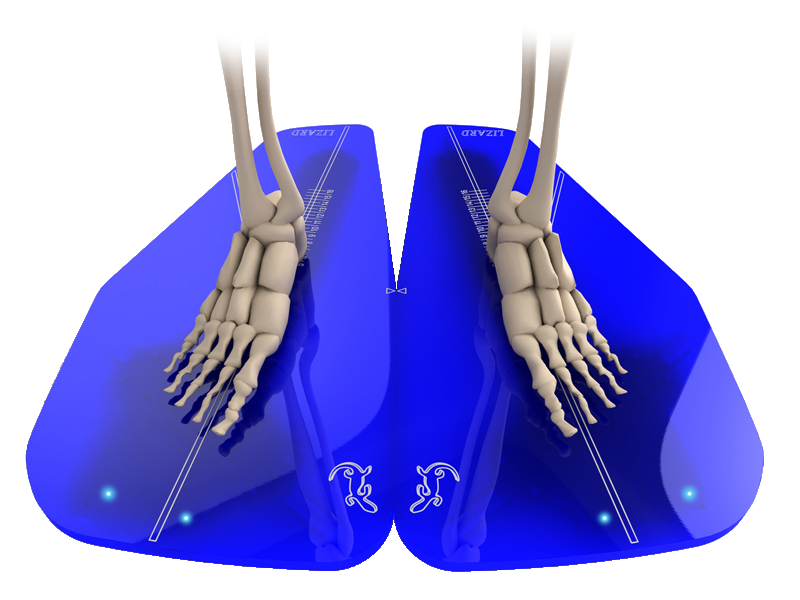
When analyzing the stabilometry, a tendency towards one emerges greater stability in the orthostatic position, suggesting a possible improvement of overall balance. It is observed a decrease in both lateral oscillations and antero-posterior, accompanied by a reduction in the speed of oscillation, a crucial parameter for optimal balance.
These results indicate a potential increase of balance and physical stability, which are fundamental for successful athletic performance.
Variations of support parameters |
|---|
Balance test | COP (center of pressure) change | Lateral-lateral displacement variation | Antero-posterior Shift Variation |
Placebo | 25.52 | 1.59 | 7.16 |
Insoles 153 | 23.31 | 1.15 | 4.09 |
Results | Reduce by 8.6 | Reduce by 27.7 | Reduce by 42.7 |
Counter movement jump
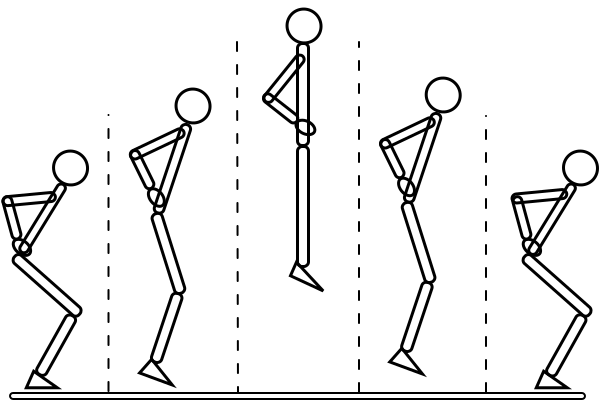
This parameter provides an assessment of the time required for an athlete to generate force. Increasing energy production in sport implies an improvement in the speed of force development, allowing for a greater ability to generate impulse in short periods and over short distances, thus optimizing the application of forces in specific movements
This can translate into greater efficiency in the execution of explosive actions and better reactivity during athletic performances.
2-step analysis |
|---|
Explosive strength test | Concentric phase | Eccentric phase |
Placebo | 1167.14 | 1618.54 |
Insoles 153 | 2804.42 | 2596.24 |
Results | Reduce by 140.5 | Reduce by 60 |
Leg Press
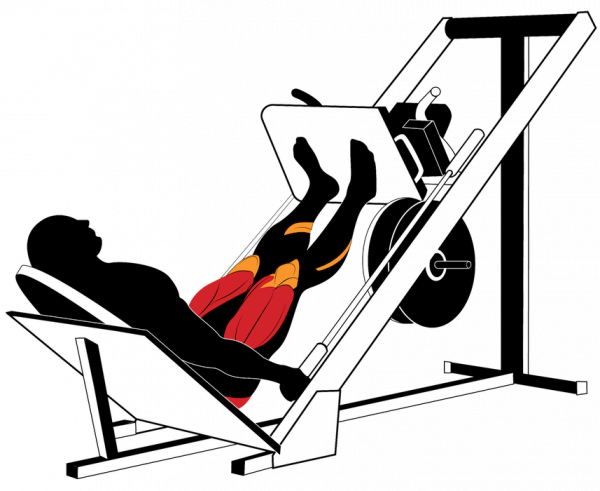
The electromyographic analysis of the leg press shows a lower activation, on average, of the homologous muscles when using the energy insoles. This translates into a reduction in the neuromuscular imbalance between the different muscle groups listed in the table.
This phenomenon indicates a better neuromuscular rebalancing during strength tests, suggesting a potential increase in efficiency and muscular coordination during the execution of strength exercises.
Test Leg Press Strength Statistics |
|---|
Strength test | Diff. between rectus femoris | Diff. between hamstrings | Diff. between semitendinosis |
Placebo | 43.64 | 91.23 | 6.31 |
Insoles 153 | 33.43 | 83.57 | 5.46 |
Results | Reduce by 23 | Reduce by 8.4 | Reduce by 14 |



©2024 153NewEnergy. All rights reserved.